Advertisement

After three bruising years, 2025 finally arrived with the first unmistakable signs that Germany’s real estate market had stopped sinking and begun to hold its line. Commercial values were still lower year-on-year, but the final quarter of 2024 and the opening months of 2025 delivered the first consistent upticks since the correction began. Residential prices rose again in the major metros. Lending volumes returned selectively. And a new CDU/SPD government signalled something not heard in Berlin for years: property was no longer a sector to restrain, but an economic lever to pull.
The investor lesson of the year was blunt. Germany did not escape the downturn through clever structuring or temporary liquidity. It worked through it the hard way — via price corrections, stalled developments, insolvencies and a re-rating of risk. The market is not cheap, but it is investable. And that shift in sentiment shaped every asset class.
By mid-year, most market observers openly described the downturn as cyclical, not systemic. The major associations framed the repricing as overdue after a decade of zero-rate excess, not a prelude to a bank-led crisis. The data supported it: value declines slowed sharply, and selected commercial indices finally turned positive.
Crucially, the insolvency wave that dominated 2023 and 2024 also began to stabilise. New cases still appeared — as REFIRE reported throughout the spring — but the pace slowed, administrators increasingly pursued orderly sales rather than fire disposals, and lenders showed a greater willingness to negotiate restructurings rather than trigger collapses. It was not a recovery, but it was no longer a cascade.
Politically, the new coalition’s agenda — faster permits, streamlined planning, Building Type E, Bau-Turbo-style reforms, incentives for office-to-residential conversions, fresh depreciation options and big-ticket investment through the Climate and Transformation Fund — began to harden expectations that the state intended to unlock capital rather than smother it. Whether 2026 brings materially more construction is another matter, but investor confidence undeniably shifted.
REFIRE’s own reporting across the year picked up the same message from market participants: the era of waiting for the bottom is over.
Residential was the first major asset class to pivot. After two years of declines, Q1 2025 delivered price growth of around 3–4% nationally, with Munich, Berlin and Cologne in the lead. Urban rents continued their steep climb — double-digit annual increases in several cities — as the structural shortage of affordable units deepened. Housing permits rose in a few isolated cases, but completions kept falling and developers remained largely frozen by cost inflation and regulatory uncertainty.
Transactions, however, returned. Vonovia’s steady stream of disposals — to Howoge, HIH, CBRE IM and others — became a bellwether for realistic pricing. Deals landed close to book value, with modest discounts where capex backlogs were unavoidable. Banks quietly reopened the tap for multi-family lending even as they pulled back from offices.
But for all the positive trading data, residential construction remained in its weakest state in decades. High financing costs, ESG requirements, labour shortages and policy uncertainty continued to suppress new-build activity. The government’s plan to extend the Mietpreisbremse while proclaiming a renewed 400,000-unit target only reminded developers how fragile their margins still look. For investors, the implication was clear: existing, energy-efficient stock in strong locations has rarely been more valuable — or more competitively bid.
If residential offered the good news, offices remained the difficult part of the chart. On one side, prime CBD assets with strong ESG credentials resumed trading at yields not far from pre-pandemic levels. Deals such as the Upper West sale in Berlin confirmed that international capital will still write large tickets for the right properties.
On the other side, B-stock in peripheral or ageing buildings slid further into illiquidity. Increasing vacancies, rising energy costs, and heavy capex requirements pushed many assets into a holding pattern. CEOs may speak confidently about a return to the office, but actual utilisation remains well below 2019 levels.
REFIRE highlighted throughout the year how sharply office lending shrank. Banks tightened terms, raised margins and redirected capacity into residential. That forced asset owners into joint ventures, structured sales or the uncomfortable conclusion that conversion — student housing, labs, assisted living, hotels — may be the best way out. The government’s supportive rhetoric helps, but the true blockers remain zoning rigidity, fire-safety hurdles and the cost of ESG upgrades.
Logistics once again proved itself the dependable backbone of many portfolios. Vacancy rates in core clusters remained low, modern stock remained scarce, and speculative building almost disappeared. Surveys consistently ranked logistics alongside residential as investors’ preferred asset classes. Sustainability became an operational, not theoretical, issue: a large share of future demand now carries explicit CO₂ reduction targets, while much of existing stock fails to meet modern ESG standards. Rooftop PV and energy retrofits became part of the basic underwriting.
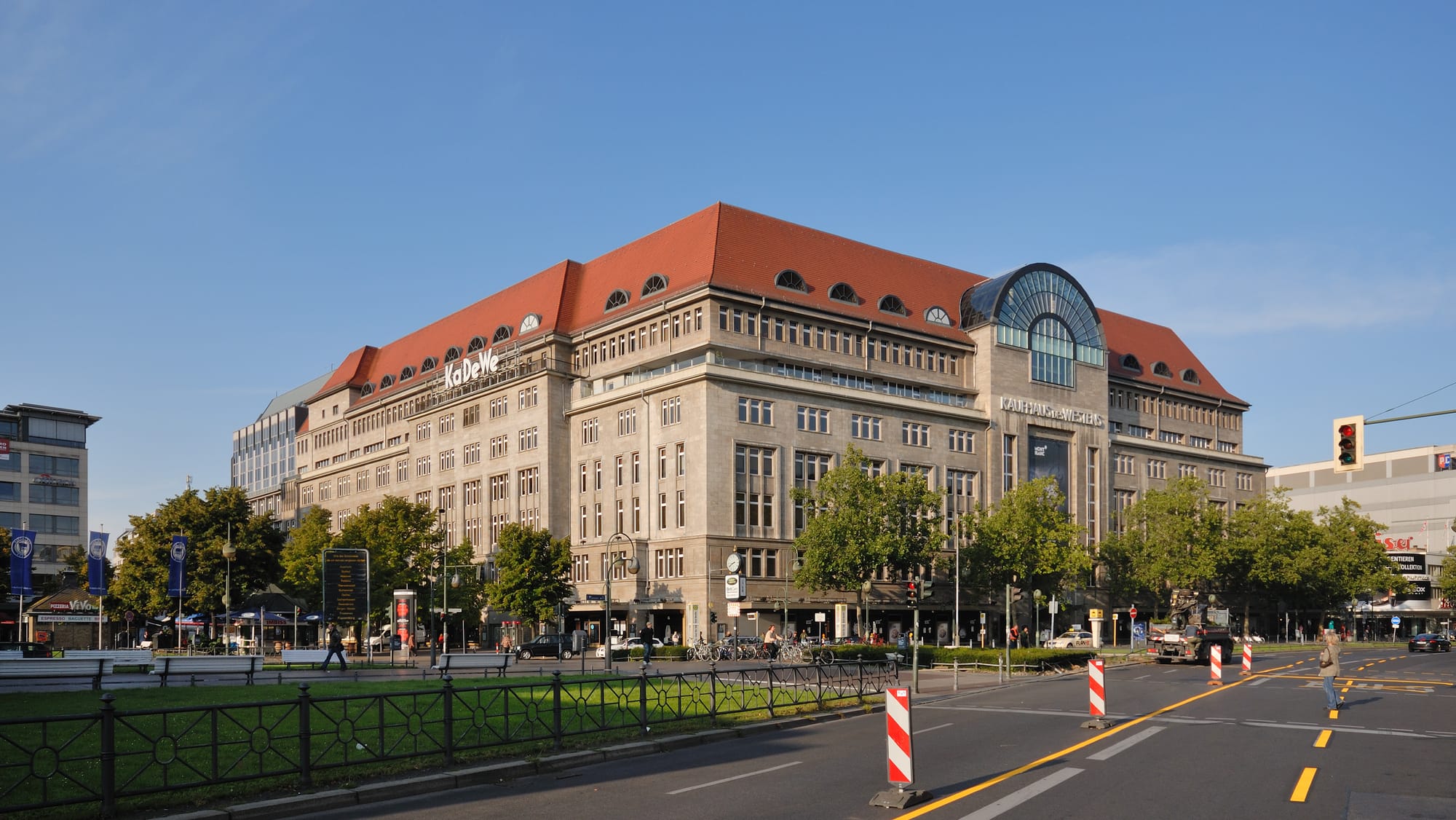
Retail delivered fewer headlines than feared. Food-anchored formats and well-located Fachmarktzentren showed resilience thanks to long leases and indexation. Older shopping centres continued to drift toward repurposing. The KaDeWe sale and Ingka’s acquisition of Pasing Arcaden served as reminders that necessity and trophy assets still command capital — even in a structurally pressured sector.
Hotels completed their long climb out of the pandemic trough. Overnight stays in 2024 slightly exceeded 2019 levels, and by late 2025 operators were talking about brand expansion and pipeline growth. There were few large trades, but the ones that did close — including Hotel de Rome and Schloss Weisshaus — confirmed that well-operated assets in top locations remain highly priced.
Alternatives moved firmly into the mainstream. Data centres in Frankfurt and Berlin attracted global platforms. Healthcare real estate, especially long-term care, continued to draw institutionals and specialist funds. Student housing gained traction with family offices. Even self-storage began to scale as operators expanded into Germany’s largest cities.
The capital stack also shifted. Open-ended funds faced continued outflows and relied more heavily on notice periods and selective sales. Listed residential players remained net sellers as they deleveraged. Private equity returned — but via debt-like instruments, recapitalisations and club deals rather than large outright takeovers. Family offices were often the quickest movers, taking advantage of less competition and less leverage.
Meanwhile, debt funds moved from niche to necessity. Whole loans, stretched senior, mezzanine and preferred equity filled the gap left by cautious banks. The refinancing demands of 2026–27 remain a looming test, but 2025 was undeniably the year private debt became a core part of the German capital landscape.
Three themes matter as we close 2025:
First, the floor is real. The broad downdraft of 2022–23 is over. The emerging cycle is slower, more income-driven and shaped by regulation, capex and operating fundamentals rather than cheap leverage.
Second, returns will be earned through asset work, not market drift. The spread between winners and losers has widened dramatically: prime vs fringe offices, A vs F energy ratings, infrastructure-rich vs infrastructure-poor regions. In REFIRE’s coverage throughout the year — from logistics briefings to office roundtables to debt summits — the message was the same: operational excellence now drives value.
Third, policy is again a central risk variable. Permitting reform, rent regulation, climate rules, BaFin’s oversight of open-ended funds and Brussels’ ESG regime will shape performance just as much as the ECB’s rate path. For cross-border capital, that raises the premium on local partners and execution.
2025 did not deliver a boom. It delivered something more valuable: a revival in discipline, a floor under pricing, and a market where capital must earn its returns through clarity, selectivity and hard work. For institutional investors, that is the real beginning of the new cycle.
Get access to selected articles


