Advertisement

Germany can build a Porsche in 72 hours, but it struggles to finish a train station in under 20 years. The new Berlin airport opened nearly a decade late, Stuttgart 21 is still a construction site, and bridges nationwide are crumbling while planning offices drown in paperwork. Every attempt at acceleration begins with a study about why acceleration is difficult.
Now Berlin is promising a €500 billion infrastructure programme while Munich dreams of hosting the 2036 or 2040 Olympic Games. Both ideas shimmer with optimism but will test the same national weakness: Germany still knows how to plan better than it knows how to deliver.
The infrastructure fund could be transformative. It promises modernised transport routes, energy grids, schools and hospitals – the scaffolding of renewed growth. Yet little of it has escaped the paper on which it was announced. Clemens Fuest of the ifo Institute warns that “the infrastructure package will not have the desired effect on economic growth.” He says the government barely disguises its budget reallocations. Bridges, he notes drily, are now being partly financed from the defence budget “because tanks drive over them too.” He expects at least a third of the fund – possibly significantly more – to be misused or diverted.
The problem is not money but execution. Endless planning cycles, legal objections and overlapping jurisdictions mean investment rarely reaches the ground. Construction firms, having held on to skilled staff through the downturn, are still waiting for work that never arrives. Tim-Oliver Müller of the German Construction Industry Federation warns that if tenders don’t appear soon, companies will have little choice but to start shedding workers. Germany's infrastructure malaise is not about capital. It's about capacity – to plan, to approve, and to build.
This is where Munich's Olympic bid enters the picture. Against a backdrop of federal paralysis, the city’s resounding "yes" vote was a rare expression of civic confidence. Two-thirds of Munich's citizens backed the proposal – 66% on a 42% turnout, a record for any Munich referendum. Mayor Dieter Reiter called it "politics for the majority." Bavaria's Markus Söder declared, "Now we're getting started. Now we're moving forward."
The bid reads less like a sporting proposal than a shopping list of long-delayed urban projects: the northern S-Bahn ring, extensions to the U4 and U9 lines, and a new Olympic Village whose 10,000 athlete apartments would later become homes. These are schemes the city already wanted but which stalled for lack of urgency, coordination or money. The Olympics would impose a deadline, attract co-financing from federal and state governments, and focus political attention in a way little else could. CSU mayoral candidate Clemens Baumgärtner put it plainly: "The infrastructure projects are getting underway because everyone has a fixed deadline in mind."
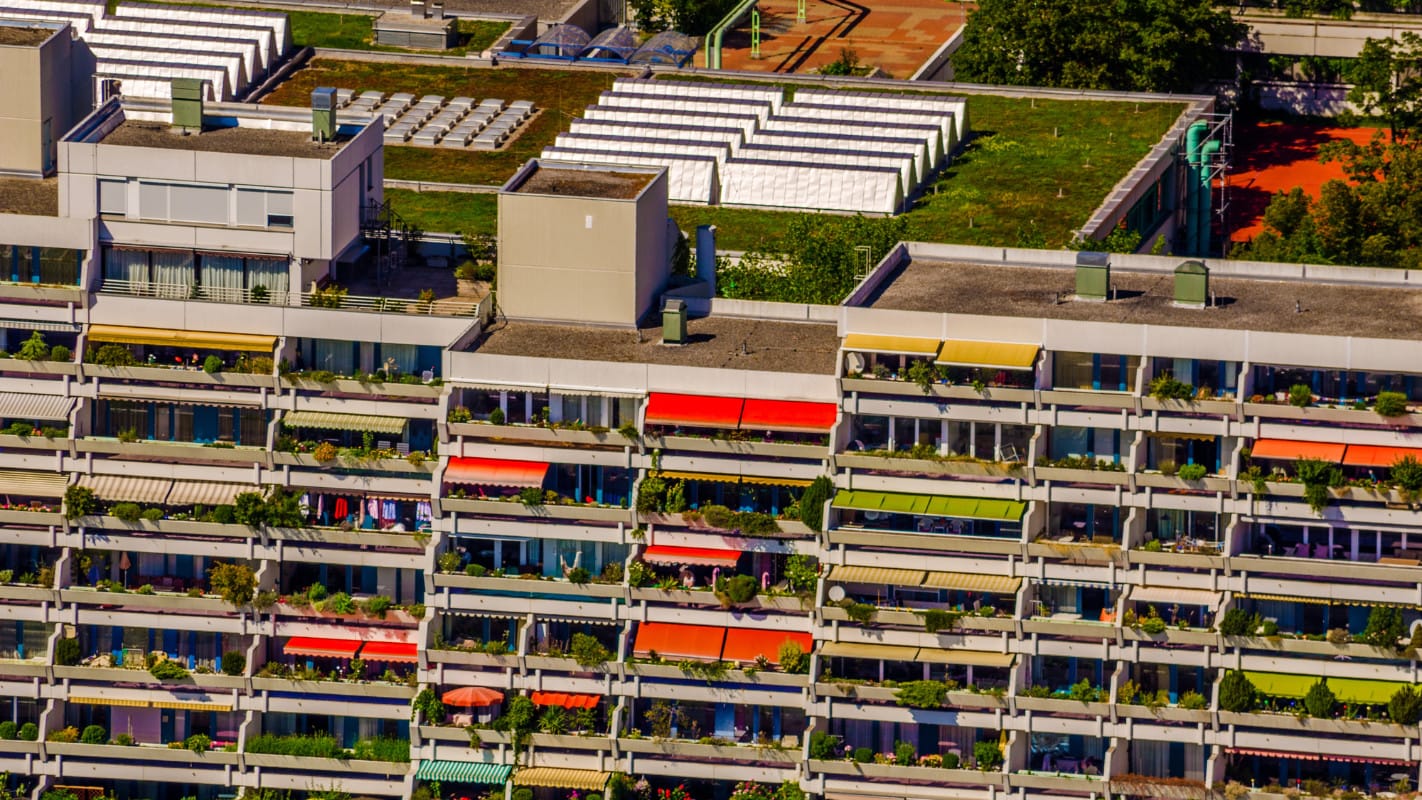
It happened once before. The 1972 Olympics gave Munich its underground and suburban rail systems, the Olympic Park and an enduring urban legacy. Necessity forced alignment between city, state and federal planners. The result was delivered on time and still functions beautifully half a century later. Your editor, working as a foreign student on a Munich building site in 1979, remembers the city basking in that achievement – the U-Bahn gleaming and modern, civic infrastructure a source of quiet pride.
Elsewhere, experience has bred the opposite instinct. Hamburg's voters rejected their own Olympic bid in 2015, scarred by memories of the Elbphilharmonie – the concert hall that opened six years late and ten times over budget. Thankfully, what began as a symbol of overreach has since become one of the city's greatest assets. Hamburg's "no" was not anti-sport; it was anti-hubris. Munich's "yes" feels like the country testing whether it dares to believe again.
It says something about modern Germany that only the promise of a global audience – or the fear of embarrassment – seems capable of breaking bureaucratic inertia. Deadlines, it seems, are the last remaining source of national discipline.
Meanwhile, investors are redrawing their maps. Institutional portfolios are tilting decisively away from office real estate and towards infrastructure. INTREAL's latest survey found that 52% plan to expand infrastructure allocations in 2026, while just 7% are targeting offices. Helaba Invest's Dirk Krupper calls it a "significant shift in mindset," predicting that "in ten years, maybe even eight, real estate will have become a sub-asset class of infrastructure."
That shift should suit Germany perfectly: a wealthy country with immense infrastructure needs, clear political intent and a €500 billion chequebook. Yet private capital still finds few entry points. Public–private partnerships remain politically sensitive. Municipal utilities worry about losing control of their power grids. And the risks are still too often borne solely by investors. The result is that capital stands idle while bridges decay and planners endlessly debate procurement rules.
Ambition has never been Germany’s problem, but alignment has. Coordination seems to appear only when the clock runs out. The Olympics, in that sense, could become a national experiment – testing whether urgency can still be engineered. If Munich uses the Games to deliver rail links, housing and modern infrastructure on schedule, it will demonstrate something the country has not managed in years: the ability to turn planning into delivery.
The stakes extend far beyond Munich. Investors and developers are already pricing in the risk that projects simply don't happen. The €500 billion fund may cheer markets, but unless execution improves, it will remain another line on the federal balance sheet. The deeper issue is cultural. Germany's pursuit of perfection – the instinct to fix the comma before laying the brick – has become paralysis.
To rebuild credibility, the country must rediscover the discipline of deadlines. Not political ones that drift, but real ones that bind. Munich's Olympic countdown offers a visible test of whether Germany can still move from blueprint to concrete.
By 2036, the result will be evident – not in the medal table, but in whether trains run, housing stands and bridges hold. If they don’t, the capital that once flowed to Munich’s cranes will flow elsewhere – and the world will not wait another twenty years for Stuttgart’s trains to arrive.
Get access to selected articles


