Advertisement

There’s a bakery at the corner of Friedrich-Wilhelm-Platz in our Berlin Friedenau neighbourhood that’s just been renovated. New ovens, new display cases, the works. Walking in there on a Saturday morning has become something of a ritual for me — not just because the bread is good (though it is), but because of what that bakery represents.
The supermarket bread in the nearby REWE is fine. Genuinely fine. Germans haven’t yet succumbed to the industrialised pap that passes for bread in much of the world — although there is more American-style sandwich bread about. But there’s something about the handmade artisan loaf — the heft of it, the proper crust, the way it smells — that makes the ten-minute walk worthwhile.
What has always struck me, living as I have in Germany for more than half my adult life, is how seriously Germans take their bread. And I mean seriously. There are more than 3,200 officially registered types of bread in Germany. Read that number again. Three thousand, two hundred. UNESCO added German bread culture to its list of Intangible Cultural Heritage in 2015, and while that might sound like bureaucratic box-ticking, it actually makes sense when you understand what’s behind it.
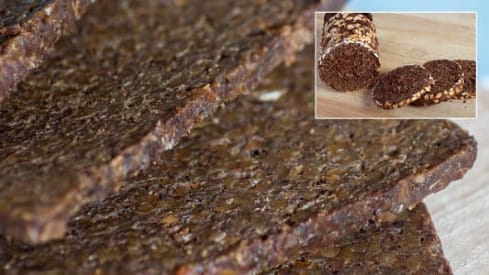
My 99-year-old father, whom I visit monthly in Dublin, has had a lifelong passion for Pumpernickel — that hard German black rye bread from Westphalia. A roll of it never fails to make it into my pared-down rucksack on every trip, despite Ryanair’s stringent baggage policy. Fortunately they charge by size, not weight — such is the density of that packed log of edible goodness.
This variety isn’t an accident. It’s the product of Germany’s fragmented history — all those small duchies and kingdoms, each with their own bread traditions, their own grains, their own methods. The climate played its part too. Not enough sunshine for wheat in many regions, so rye and spelt thrived instead, producing those dense, substantial loaves that are still the backbone of German baking today.
Now don't get me wrong, I love French food as much as the next man. Yes, the French have their baguettes — and they’re justifiably proud of them. But strip away the romance and what have you got? Baguettes. Pain de campagne. A handful of variations. The Italians? Focaccia, ciabatta, and you’re basically done. Both excellent traditions, but narrow.
The Germans, characteristically, have industrialised artisanship. They’ve created a system — the Meisterbrief, or master craftsman qualification — that turns out bakers who can set up shop almost anywhere in the world and have customers queuing from day one. I’ve patronised German bakeries in Singapore, Dublin and New York. They succeed because the training really is that rigorous.
I saw this firsthand when I moved to Berlin from Frankfurt ten years ago. My young neighbour, a teenage lad clearly not cut out for academic life — I know because his mother asked me to help him with his English and I could see it wasn’t clicking — landed a job at the local bakery. Selling Brötchen, serving customers. He took to it.
In the end he didn’t apprentice as a baker but as a cook, and that apprenticeship opened everything up for him. Switzerland. Mexico. Running restaurants. Now he’s back in Berlin with a new place right on Friedrichstraße.
That’s what a proper vocational system does. It gives young people a path that doesn’t require a university degree but still leads somewhere.
And yet - this is the irony - German bakeries are under real pressure. Many have disappeared over the past decade, squeezed by energy costs, raw material prices and a regulatory burden that often feels disconnected from daily reality. One baker told me he spends weeks wrestling with a single compliance dossier — paperwork that, in his words, “no one ever looks at, no one ever checks”. “I didn’t become a baker to fill in forms,” he said.
But the tradition isn’t dead. In Munich you’ve got Rischart and Aumüller, among many other great names. Here in Berlin, in my Kiez around Bundesplatz, there’s Mann and Wiedemann — both Innungsbäcker, guild members who still make their own dough rather than baking off semi-prepared products. Young bakers trained in that same exacting tradition, creating bread from natural ingredients while staying rooted in German craftsmanship.
This matters for reasons beyond bread. It speaks to something essential about German culture - the tension between tradition and modernity, between the rigorous standards that produce excellence and the bureaucratic weight that can crush it. The bakery at Friedrich-Wilhelm-Platz is both at once: a centuries-old craft tradition, freshly renovated, serving customers who expect nothing less than what they’ve always expected.
I’ll keep walking down there on Saturday mornings. Partly for the bread — a good Roggenbrot or Vollkornbrot, proper density, proper crust. But partly because it reminds me why Germany does certain things better than anywhere else in the world. They take the fundamentals seriously.
Get access to selected articles

